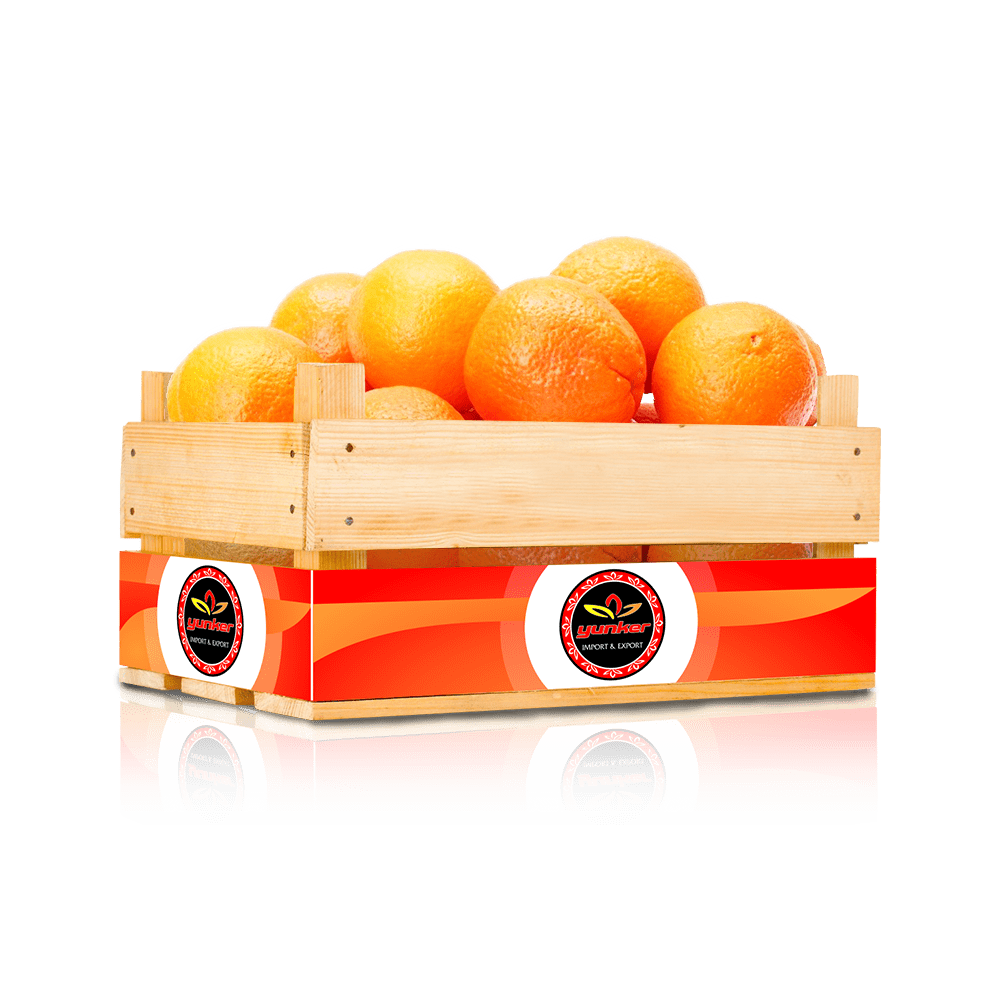
An evergreen tree (Citrus aurantium) from the citrus family of dicots, native to India, and its spherical or egg-shaped, fragrant fruit. Since the orange is a valuable fruit tree, it is now widely cultivated in all warm regions. Its height is 3-4 meters. The leaves are hard, glossy on the upper surface, hairy on the lower surface, and herbaceous flowers.
It is one of the Navel type oranges originating in California. Its trees have a strong structure and development. It is fertile and two weeks earlier than Washington. Its fruits are smaller, more oval shaped and of lower quality than the Washington Navel. Sugar content is 11.2%, acid content is 0.89%, sugar/acid ratio is 12.6%. It is one of the earliest among the navel oranges.

It is the oldest navel orange variety known in the Mediterranean region. It is the most demanded variety among table oranges. It is grown in the whole Mediterranean Region, from Antalya to Hatay. Recently, planting has been done from the Navel group. The fruits are large, round to oval, with a distinct “belly” at the tip of the style.
The main production area of this variety in Turkey is the Mediterranean Region. It is a variety that can adapt very well to different ecological conditions. It is the latest sweet orange and is a very heat resistant variety. Known under different names, this variety is an orange variety suitable for both table and industry. It is aromatic, delicious and of high quality.
He entered Turkey in 1937. The fruits are found in clusters on the tree. Coloring of the fruit may vary according to climatic conditions. It is the darkest and earliest variety among blood oranges. The harvest time of the fruit starts in December and continues until February. After February, deterioration in fruit quality can be seen.
Not considered a blood orange, but the flesh of which is as red as the flesh of Star Ruby, this variety is a navel orange. The fruits are smaller than other navel orange varieties. The peel thickness is thinner than other navel orange varieties.
Known as the sister of the Washington navel orange, Spring Navel is a very flavorful orange variety with a strong aroma. It matures a few weeks after Washington and is larger in volume than Washington. The skin color and fruit flesh are orange.